Every New York home has them: the red wine spill from last month’s dinner party, the coffee ring that appeared on a Monday morning, the bathroom grout that has slowly turned from white to gray. Stains and grime are part of life in a busy apartment, but they don’t have to be permanent.
At Sparkling Housemaids NYC, we tackle stubborn stains and dingy grout every day. Here are our best tips for handling both, along with a few honest notes on when it’s time to bring in a professional.
Part 1: Removing Stubborn Carpet Stains
The Golden Rules of Stain Removal
Before you reach for any cleaner, keep these in mind:
Act fast. Fresh stains are far easier to remove than set-in ones.
Blot, don’t rub. Rubbing pushes the stain deeper into the fibers and can fray the carpet.
Work from the outside in. This keeps the stain from spreading.
Test first. Try any cleaning solution on a hidden spot to check for color damage.
Use cold water for most stains. Hot water can set certain stains, especially protein-based ones.
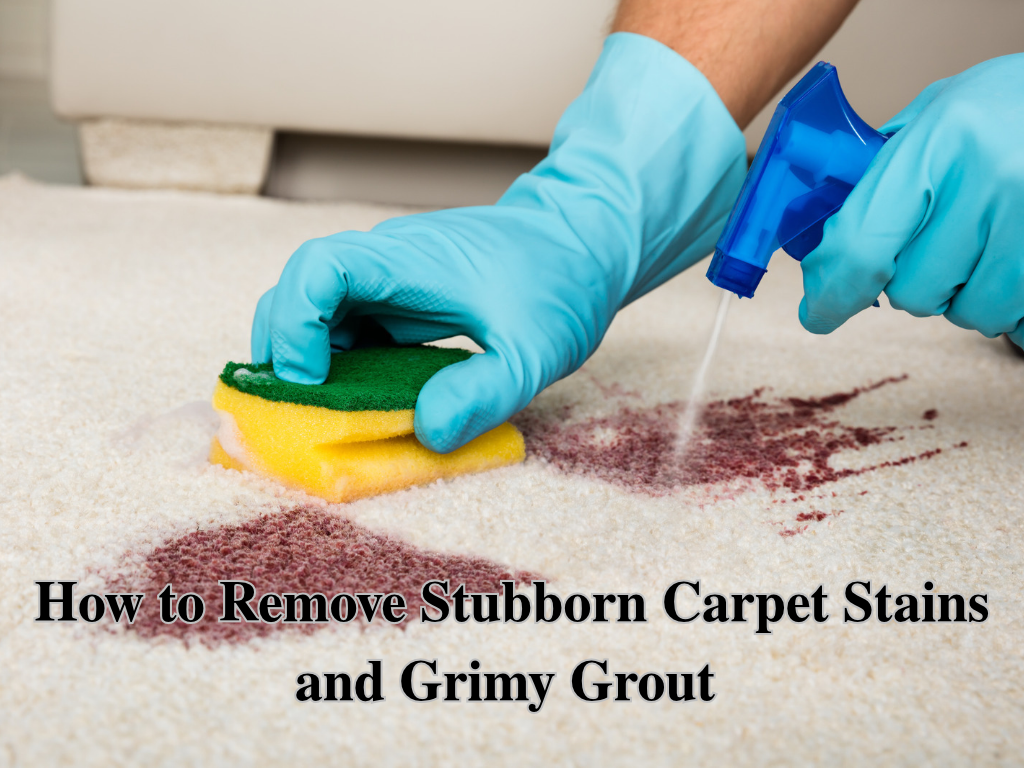
Remove Stubborn Carpet Stains and Grimy Grout
Stain-by-Stain Guide
Red wine
Blot up as much as possible with a clean white cloth. Apply a small amount of cold water, then blot again. Mix a teaspoon of dish soap with a cup of cold water, apply, and blot until the stain lifts. Rinse with cold water and blot dry.
Coffee and tea
Blot, then apply a mixture of one tablespoon of dish soap and one tablespoon of white vinegar in two cups of warm water. Blot until the stain fades, then rinse with cold water.
Grease and oil
Sprinkle baking soda or cornstarch over the spot and let it sit for 15 to 30 minutes to absorb the oil. Vacuum it up, then dab with a small amount of dish soap and warm water. Blot and rinse.
Pet accidents
Blot up as much as you can, then apply an enzyme-based pet cleaner. Enzymes break down the proteins that cause lingering odors. Avoid ammonia-based products, which can actually encourage pets to return to the same spot.
Mud and dirt
Let it dry completely, then vacuum up the loose dirt. Treat any remaining mark with dish soap and water. Trying to clean wet mud usually spreads it.
Ink
Dab (never rub) with a cloth dampened with rubbing alcohol. Use a fresh section of the cloth often so you don’t transfer ink back onto the carpet.
Candle wax
Place a paper towel over the wax and gently press with a warm iron on low heat. The wax transfers to the towel. Repeat with a clean section until it’s gone.
Common Carpet Cleaning Mistakes
Using too much water or product. Over-wetting can soak into the padding, causing odors and mildew.
Scrubbing aggressively. This damages fibers and can leave a fuzzy, worn patch.
Mixing cleaning products. Never combine bleach with ammonia or other cleaners. The fumes can be dangerous.
Using bleach on carpet. It will permanently discolor most carpets.
Skipping the rinse. Leftover soap attracts dirt and makes the spot get dirty again faster.
Part 2: Cleaning Grimy Grout
Grout is porous, which means it absorbs moisture, soap scum, and dirt. In NYC bathrooms and kitchens, where space is tight and ventilation can be limited, grout often darkens quickly.
Basic Grout Cleaning Method
What you’ll need:
Baking soda
Water
White vinegar (for ceramic or porcelain tile only)
A stiff grout brush or old toothbrush
Clean cloths
Steps:
Sweep or vacuum the area to remove loose debris.
Make a paste with three parts baking soda to one part water.
Apply it along the grout lines and let it sit for 10 to 15 minutes.
Spray with white vinegar. The fizzing helps lift grime. Skip this step on natural stone, as acid can etch it.
Scrub with your brush, working in small sections.
Rinse thoroughly with clean water and wipe dry.
For Tougher, Deeper Stains
Hydrogen peroxide and baking soda paste. This is a gentler whitening option for stained grout. Apply, wait 15 to 20 minutes, scrub, and rinse.
Oxygen-based bleach. Mix according to the package directions, apply, and let it sit before scrubbing. It’s less harsh than chlorine bleach.
Steam cleaning. High-heat steam loosens embedded dirt without heavy chemicals and is especially effective on kitchen floors.
Grout Care Tips
Ventilate. Run the exhaust fan or open a window during and after showers.
Wipe down wet tile. A quick squeegee after showering prevents soap scum and mildew.
Seal your grout. After a deep clean, applying a grout sealer helps repel moisture and stains. Most grout should be resealed every one to two years.
Avoid harsh acids on natural stone. Always check what type of tile you have before choosing a cleaner.
When DIY Isn’t Enough
Home remedies work well on fresh or moderate stains, but some situations call for professional help:
Stains that have been set for weeks or months
Large areas of discolored carpet
Grout that is deeply stained, moldy, or crumbling
Delicate or specialty carpets such as wool or silk
Natural stone tile that could be damaged by the wrong product
Lingering odors that return after cleaning
Professionals have commercial-grade equipment and products, plus the experience to know what is safe for your specific surfaces. That means better results with less risk of damage.
Let Sparkling Housemaids NYC Handle It
You shouldn’t have to spend your weekend on your hands and knees with a toothbrush. Our experienced cleaning team knows how to restore carpets and bring grout back to life, whether you live in a studio in Manhattan, a brownstone in Brooklyn, or a family home in Queens.
Ready for fresh carpets and bright, clean grout? Contact Sparkling Housemaids NYC today for a free quote and let us bring the sparkle back to your home.
